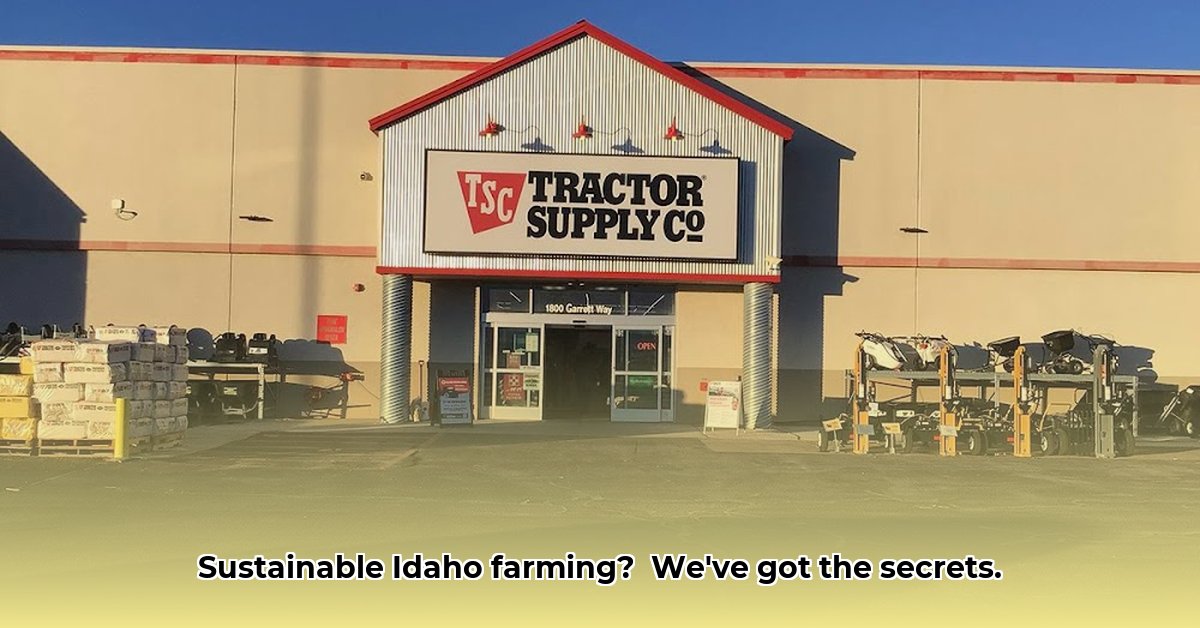
Tractor Supply Caldwell Idaho: Partnering for a Greener Future
Tractor Supply Company (TSC) is more than just a retailer for Caldwell, Idaho farmers; it's a vital resource impacting the region's agricultural sustainability. This article explores TSC's role, highlighting both its contributions and the areas needing improvement for a truly sustainable agricultural future in the region. We'll examine the challenges and opportunities, focusing on actionable steps for farmers, TSC, and consumers alike. For more on Tractor Supply's nationwide impact, see this related case study.
How does easy access to essential supplies contribute to sustainable farming practices? TSC's single-source convenience allows farmers to save time and resources, indirectly supporting sustainable efforts by reducing logistical burdens. However, the sustainability of these supplies themselves remains a critical question.
Accessing the Essentials: Convenience and its Consequences
For Caldwell farmers, TSC provides readily available essentials – fertilizers, fencing materials, and more. This streamlined access boosts efficiency, especially for smaller farms. This convenience is a crucial element for successful farming, regardless of sustainability goals. However, the crucial next question is: how sustainable are these supplies themselves?
Do TSC's fertilizer options minimize environmental impacts? Are their fencing materials sustainably sourced and ethically produced? This lack of readily available information on the environmental impact of TSC’s entire supply chain is a major obstacle to evaluating their overall contribution to sustainable agriculture.
TSC's Sustainability Efforts: A Closer Look
TSC offers various products that directly support sustainable farming: solar-powered water troughs, energy-efficient barn lighting, and composting tools. These promote eco-friendly techniques. But assessing its true environmental impact requires a broader examination of its supply chain – material sourcing, transportation, and packaging. A gap in readily available data hinders a complete assessment of TSC's environmental footprint.
“We need more transparency from companies like TSC to understand their full commitment to sustainability,” states Dr. Emily Carter, Professor of Environmental Science at Boise State University. “Without access to detailed data on their carbon footprint and waste management, it's difficult to assess their true impact.”
Data Gaps and the Need for Transparency
A significant challenge is the scarcity of public data on TSC’s environmental impact. While TSC undoubtedly engages in some sustainable practices, comprehensive details regarding its carbon footprint, waste management, and proportion of sustainably-sourced goods remain unclear. This lack of transparency makes it difficult for consumers and farmers alike to make truly informed, environmentally conscious decisions.
Imagine if each TSC product clearly labeled its environmental impact, including its carbon footprint and the sustainability of its materials. Such transparency would empower consumers and drive demand for more environmentally responsible practices.
Actionable Steps Towards a Greener Future
To improve TSC’s role in sustainable agriculture, several key steps are needed:
TSC needs to conduct comprehensive life-cycle assessments of key products. These assessments will evaluate their environmental impact from start to finish. (Efficacy: improved understanding of environmental footprint, leading to targeted improvements.)
TSC must publicly release detailed sustainability reports. This transparency will demonstrate their commitment and progress toward environmental goals. (Efficacy: increased accountability and consumer confidence.)
TSC should prioritize suppliers committed to sustainable and ethical practices. This includes scrutinizing the environmental and social impact of their entire supply chain. (Efficacy: reduced environmental impact across the supply chain.)
TSC needs to expand its offerings of organic, biodynamic, and sustainably produced goods. (Efficacy: increased choice and market share for sustainable options.)
Idaho farmers can contribute by engaging in open dialogue with TSC staff, advocating for policy changes, and choosing sustainable products whenever possible. Consumers can empower change by demanding transparency and supporting TSC's sustainable initiatives.
Beyond the Store: A Collective Responsibility
The path to sustainable agriculture requires collaboration. Governmental agencies can fund research, provide incentives, and develop supportive policies. Local communities can support local farms and farmers' markets, building stronger regional food systems. The collective action of all stakeholders is essential for achieving a more sustainable agricultural future.
Navigating Challenges and Maximizing Rewards
The transition to sustainable agriculture presents challenges: supply chain vulnerabilities, fluctuating market prices, and environmental uncertainties. However, the potential rewards—enhanced resilience and a sounder environmental and economic model—are significant. Collaboration between TSC, farmers, and the wider community can mitigate risks and unlock these rewards.
A Shared Vision for the Future
Tractor Supply is integral to Caldwell's agriculture. While more data is needed to fully assess its environmental footprint, the potential for positive change is undeniable. By embracing transparency, fostering collaboration, and collectively striving for sustainable practices, we can create a healthier and more prosperous future for Caldwell's agricultural community.